


Listening
Hear how the language sounds

Vocabulary is the foundation of any language. The more words you know, the easier it becomes to understand, read, and speak.

Your vocabulary has a major impact on how quickly you can reach the next level. But simply memorizing long lists of words rarely delivers the results you need. In this guide, we’ll look at the best ways to learn foreign vocabulary and how the My Words app can help you remember new words quickly and effectively.


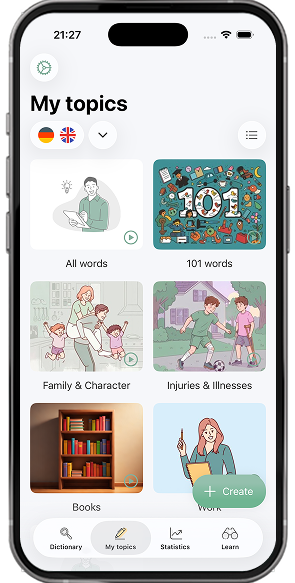
We studied the most effective vocabulary-learning methods, brought them together, and built them into the My Words app.
There is no single method that works equally well for everyone. Some people prefer listening and repeating words aloud, while others find it easier to use flashcards, practice dictation, or encounter words in context. My Words lets you combine these approaches and choose what works best for you. You do not need to invent exercises—the app has them ready for you.
To learn and remember foreign vocabulary effectively:
Next, let’s see how My Words brings these methods together and makes vocabulary practice faster and easier.
Add the words you need
Here are a few everyday situations where creating your own word lists can help.
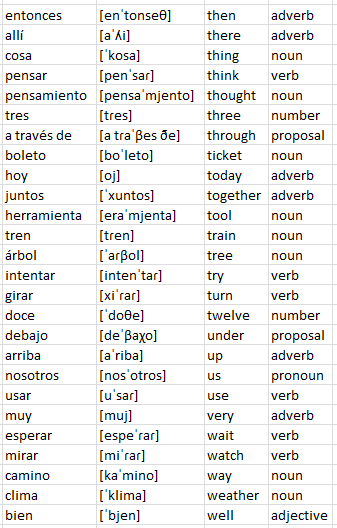
Situation:
I need to learn a list of words before class. Even a long list is easy to add—I simply import it into My Words as a CSV file.

Situation:
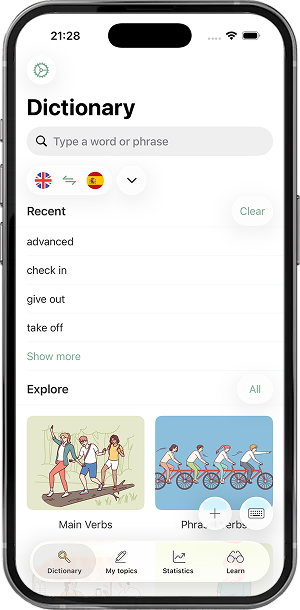
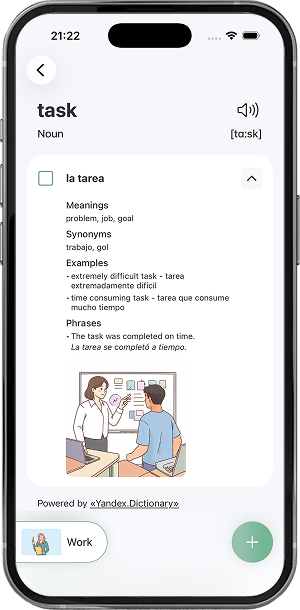
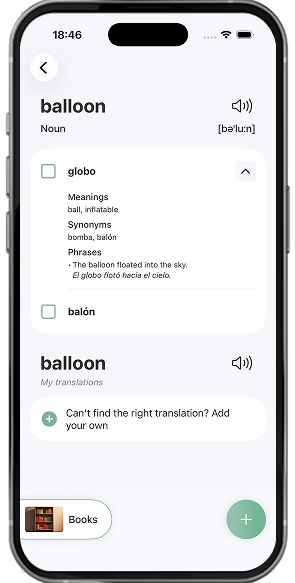
While reading a printed book, I look up unfamiliar words in the My Words dictionary, check their meanings, examples, and pronunciation, then save them to study later.
Situation:
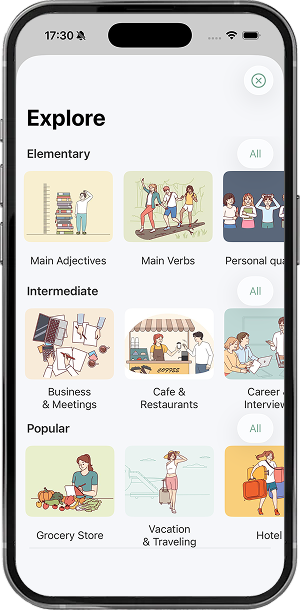
Before a trip, I add a ready-made travel topic and review the words and phrases I am most likely to need.

Situation:
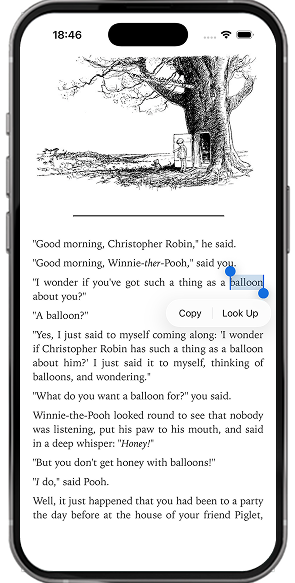
I read an ebook in My Words, look up unfamiliar words, and save them to review later.
Situation:
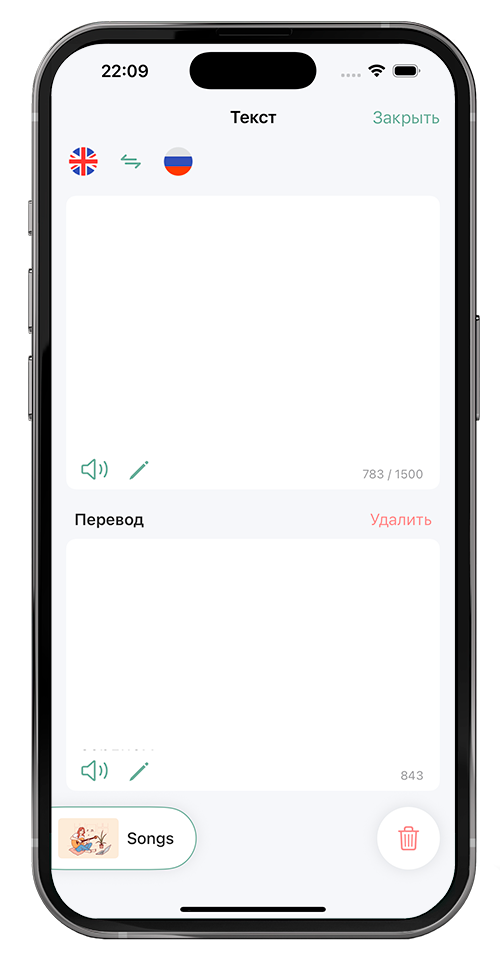
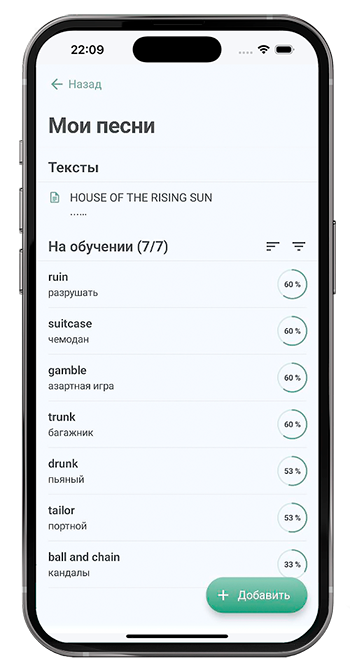
I download the lyrics to a favorite song and save them in My Words. Then I highlight unfamiliar words and add them to my vocabulary list.

Keep everything organized
Good organization makes vocabulary easier to remember.
Words stick better when you connect them with a clear topic or situation: work, travel, a job interview, or a book you are reading. When your vocabulary is grouped by topic, the word you need is easier to recall, find, and review.
Learn words in real use
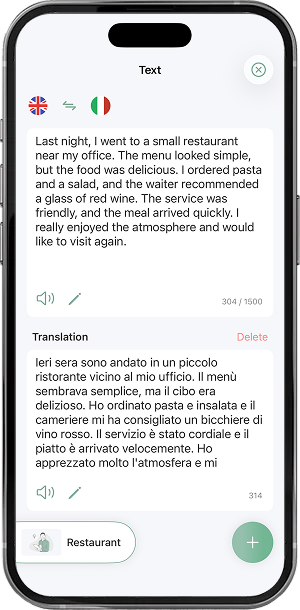
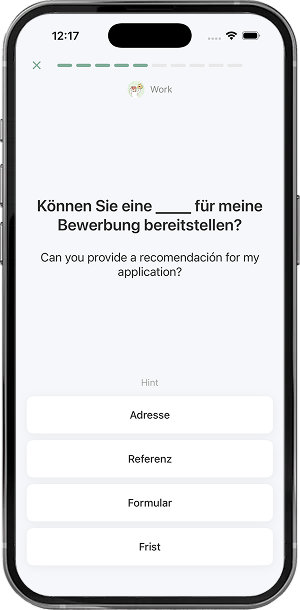
Start practicing how to use each word from the beginning.
Memorizing isolated word lists is rarely enough. You also need to see how a word works in sentences and short texts. Context gives a word meaning and makes it easier to remember. My Words can create texts that include the vocabulary you want to learn.
Spaced repetition + the Leitner system
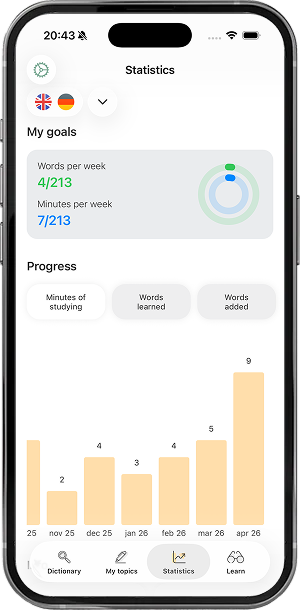
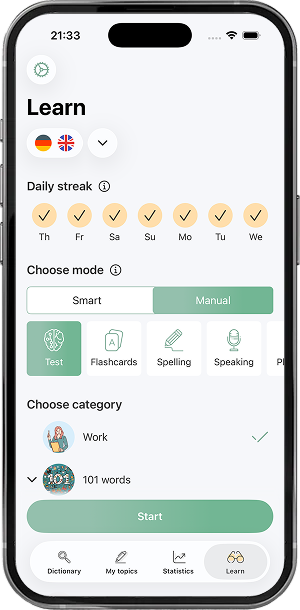
One of the most effective ways to remember information long-term.
Instead of cramming the same words continuously, review them at gradually increasing intervals. My Words combines spaced repetition with the Leitner system and adapts reviews to your learning pace. Track your daily streak and progress as you go.
Read more about spaced repetition.
Active recall and visual memory
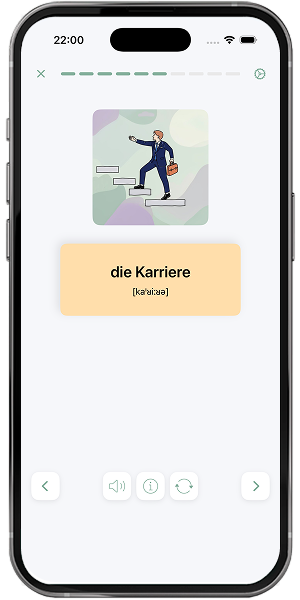
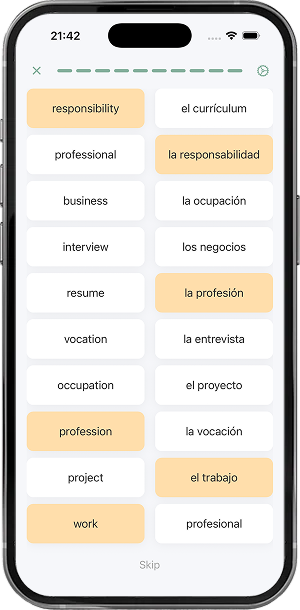
Try to recall the word before you flip the card.
Flashcards are one of the most effective tools for learning vocabulary. One side shows the word and the other shows its translation. This uses active recall: first retrieve the answer from memory, then flip the card to check it. You can reinforce the same vocabulary by matching words with their translations. Images also provide useful visual associations.
Hear the correct pronunciation
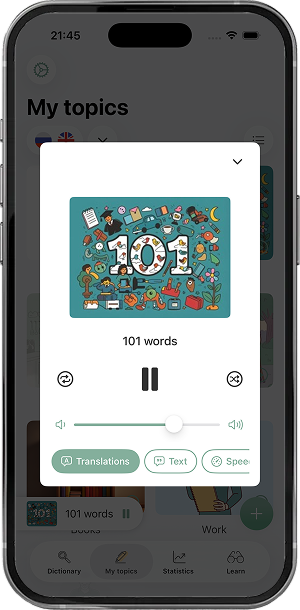
Listen to your vocabulary lists regularly—on your commute, for example.
The built-in audio player helps you learn the correct pronunciation and gives you another natural way to absorb vocabulary: hearing the words spoken aloud.
Build muscle memory
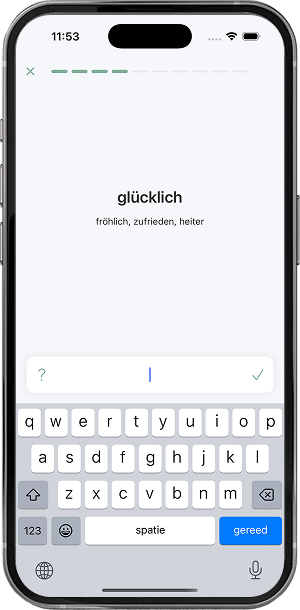
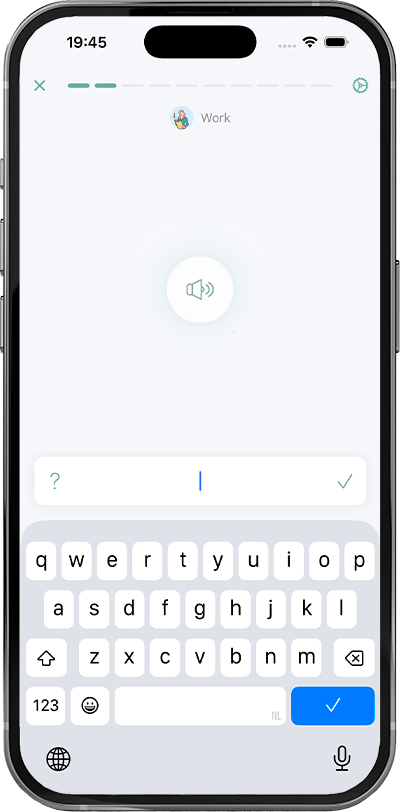
Dictation is about more than spelling.
Writing does not just help you learn how a word is spelled. It also engages motor memory, giving your brain another way to encode the word. Create a dictation from your own vocabulary list and practice the words that matter to you.
Memory improves when you speak
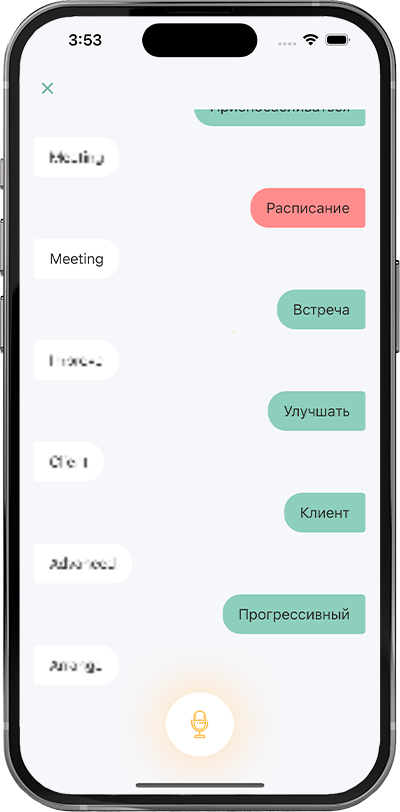
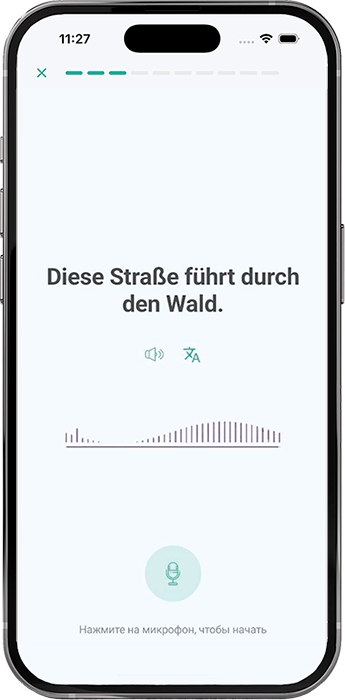
Then use those new words in conversation.
Speaking gives you two benefits at once: you practice pronunciation and strengthen the word through another form of recall. Saying complete phrases also adds context. My Words checks your pronunciation and shows which words you said correctly.
Five-minute exercises
Practice reading, writing, listening, and speaking.
Hear how the language sounds

Write vocabulary dictations

Practice your pronunciation

Read short, useful texts